
Petrol and diesel prices are still edging down at UK forecourts, but slowly, and the bigger fuel story this week came from the official figures. The Office for National Statistics said on Wednesday that inflation rose to 3.5% in September, with motor fuels the main driver. Next Wednesday the Chancellor delivers a Budget that has to settle what happens to fuel duty in January.
Pump prices today: small falls, still close to £2 for diesel
FuelWise's figures for 22 October put the average price of E10 unleaded at 174.0p a litre across 7,270 forecourts, down 0.4p on a week ago. Standard diesel averages 199.1p across 7,472 forecourts, down 0.2p on the week. Neither moved over the last day.
Premium E5 petrol averages 191.4p, 0.6p lower than a week ago and 3.4p lower than 30 days ago. Premium diesel averages 218.5p, unchanged on the week.
Forecourts are still cutting more often than they are raising prices. In the last 24 hours FuelWise recorded 903 price changes: 693 cuts and 210 rises. Over the past seven days there were 5,122 cuts against 2,309 rises. The falls are small, though, and our weekly Price Pulse found petrol down 0.5p and diesel down 0.7p in the week to 18 October.
For a 55-litre tank, the averages work out at about £95.70 for E10 and £109.50 for diesel. Live averages are on our petrol prices and diesel prices pages.
Inflation: fuel pushed the cost of living up
The ONS September bulletin, published on 21 October, said CPI inflation was 3.5% in the 12 months to September, up from 3.1% in August. Transport, particularly motor fuels, made the largest upward contribution.
The ONS said average petrol prices rose 8.2p a litre between August and September to 169.5p, the highest since August 2022. Diesel rose 10.7p to 192.5p, the highest since July 2022. Overall, motor fuel prices were 29.8% higher than a year earlier.
Those are the ONS's September averages, measured its own way, so they don't line up exactly with FuelWise's daily figures. Taken together, they show prices rose sharply through September and have eased only a little since.
Responding to the figures, Chancellor John Healey said: "We know that price rises from conflicts in the Middle East and Europe are hitting Britain and countries worldwide," ITV News reported. He added that his Budget next week would give "businesses and families some breathing space", without giving details.
The Budget and fuel duty
The Budget is on 28 October 2026. Fuel duty is one of the decisions drivers will be watching most closely.
According to HM Treasury's amended fuel duty rates, the temporary 5p-a-litre cut, first introduced in March 2022, runs until 31 December 2026, keeping duty on petrol and diesel at 52.95p a litre. Unless the government changes course, duty is due to rise to 55.95p on 1 January 2027 and 57.95p on 1 March 2027. The government has said it will confirm the final rates at Budget 2026.
FuelWise will report what the Budget means for pump prices once it is announced.
The world behind the prices
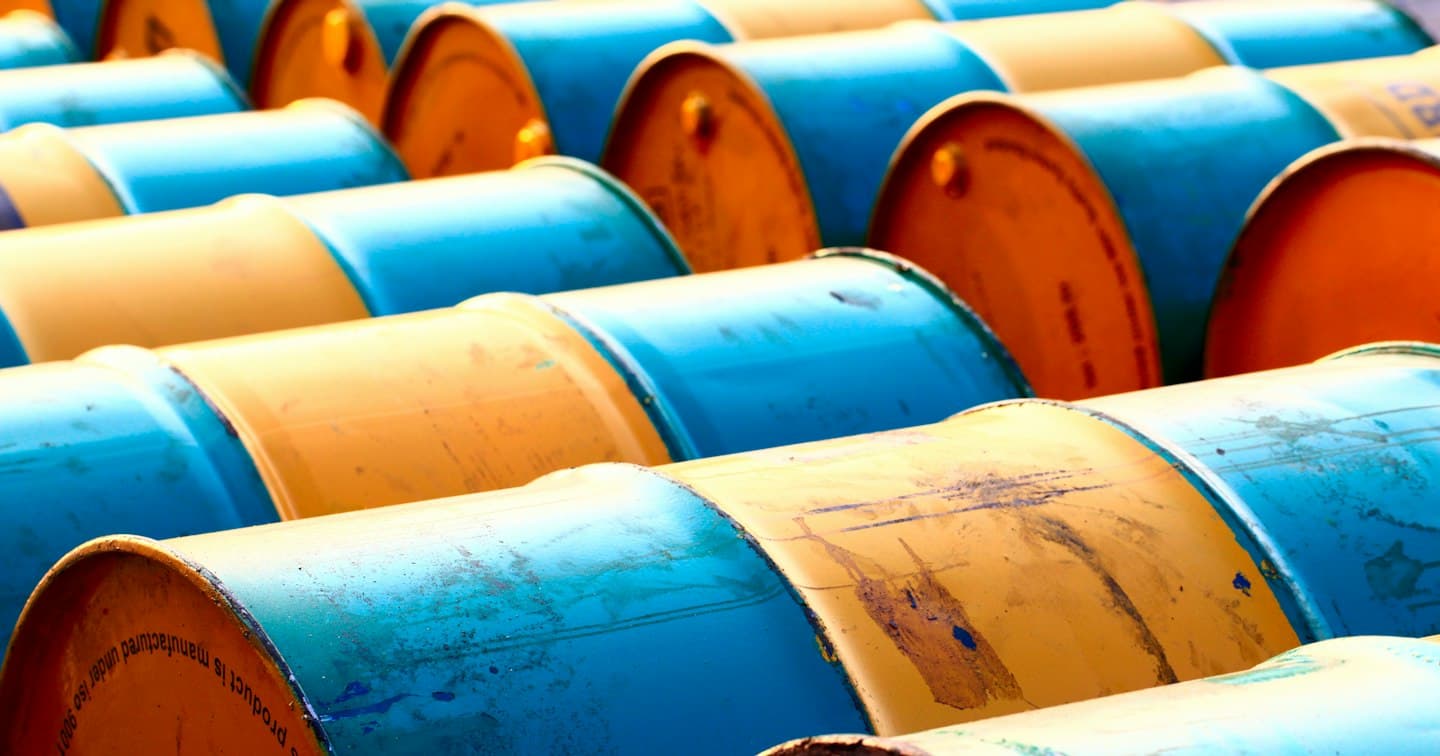
Oil is near a five-month high. Brent crude settled at $108.82 a barrel on Wednesday, little changed on the day, after hitting its highest level in five months during the previous session, Reuters reported. Prices rose more than $2 during Wednesday's session before falling back.
Attacks on Gulf shipping and Saudi oil sites continue. Reuters cited Kpler data showing at least 18 attacks on vessels over the past two weeks. LSEG analysts warned that Iran was targeting tankers well beyond the Strait of Hormuz. On Monday, Yemen's Iran-aligned Houthis claimed responsibility for attacks on a Saudi Aramco site in Yanbu and on the Shaybah oilfield. In its October Oil Market Report, the International Energy Agency said Gulf crude exports had recovered to more than 75% of pre-war levels in September, but that renewed attacks in the Gulf left that recovery "fragile".
Diesel is the tightest market. The IEA said diesel markets remained under significant strain. Global diesel exports in September were 700,000 barrels a day lower than a year earlier, as losses from Russia and the Middle East were only partly made up elsewhere. That helps explain why diesel averages about 25p a litre more than E10 on UK forecourts.
Russia-Ukraine talks are weighing on prices. The Kremlin said President Vladimir Putin had agreed to resume US-mediated peace talks with Ukraine as soon as next month, after meeting US envoy Steve Witkoff, Reuters reported. Dennis Kissler of BOK Financial told clients that a peace deal could unlock the tight global diesel supplies that have been pushing crude higher. In Washington, the Department of Energy said it would offer to lend up to nearly a third of the 1-million-barrel US emergency heating oil reserve to contain prices. Heating oil and diesel are closely related fuels.
Oil holding near $110 while forecourt prices drift down helps explain why the cuts are so small.
Where fuel is cheapest
Where you fill up still makes far more difference than this week's changes:
- Supermarkets: E10 averages 171.5p and diesel 196.4p at supermarket forecourts, against 174.6p and 199.9p at other non-motorway sites. Among the supermarkets, Sainsbury's and Morrisons average 171.6p for E10, and Sainsbury's has the lowest diesel average at 196.4p. See our Sainsbury's and Tesco pages.
- Motorways: E10 averages 192.2p and diesel 215.8p at motorway services, about 19p a litre more than supermarkets for diesel, or roughly £10.70 on a 55-litre fill.
- Northern Ireland: The cheapest UK nation or region, with E10 averaging 166.2p and diesel 191.2p. Antrim and Newtownabbey and Ards and North Down have the lowest council-area E10 average, at 165.4p. Details are on our Northern Ireland page.
- Biggest weekly falls: Scotland's E10 average fell 0.8p this week to 174.8p, the largest drop of any region. The North East, at 172.3p, is the cheapest region in Great Britain for E10.
What it means for drivers
Prices are falling, but by fractions of a penny a week, and oil is close to its highest level in five months. The surest saving is still the gap between forecourts: on a 55-litre diesel fill, a supermarket averages about £2 less than other forecourts and over £10 less than a motorway. You can compare forecourts near you on our live price map. The next big date is the Budget on 28 October, when the government is due to confirm fuel duty rates from January.
Sources
- Consumer price inflation, UK: September 2026 — Office for National Statistics
- UK inflation jumps to highest rate in almost a year after fuel prices climb — ITV News
- Chancellor letter to the Treasury Select Committee - Budget 2026 date — GOV.UK / HM Treasury
- Amended Fuel Duty rates: 2026 to 2027 — GOV.UK / HM Treasury
- Oil prices steady as investors weigh geopolitics, lower US stockpiles — Reuters (via Yahoo Finance)
- Oil Market Report - October 2026 — International Energy Agency
- FuelWise price data from the UK Government's Fuel Finder scheme (Open Government Licence v3.0).