Chancellor John Healey's Budget on Wednesday left the tax on every litre of petrol and diesel where it is. The 5p fuel duty cut and the freeze now run to 1 July 2027. That means no tax rise at the pumps this winter, but no new cut either. What you pay over the coming weeks will still depend mostly on oil markets, and they are being pushed around by the war in the Middle East.
FuelWise's figures this morning (29 October) show prices still falling slowly. Petrol is falling faster than diesel.
What the Budget means at the pump
The Budget 2026 document on GOV.UK confirms the government will "extend the 5p fuel duty cut and freeze" to 1 July 2027, along with the road tax holiday for heavy goods vehicles. The Treasury says this keeps fuel duty as low as at any point in over 16 years.
According to the RAC's Budget summary, the 5p cut was brought in in 2022 and had been due to be reversed from April 2027. Fuel duty stays at 52.95p a litre. The RAC also reports that the Chancellor turned down calls to cut VAT on petrol and diesel. He made the tax-free business mileage rate of 55p per mile permanent for the first 10,000 miles.
So the Budget changes nothing about today's pump prices. It takes away the risk of a duty rise next spring. RAC senior policy officer Rod Dennis said: "A freeze only avoids making an already difficult situation worse – it doesn't make filling up any cheaper."
Where pump prices stand today
Across 6,907 forecourts with a recent price, a litre of E10 unleaded averages 172.5p today. That is 1.3p lower than a week ago and 2.1p lower than 30 days ago. Standard diesel averages 198.6p across 6,593 forecourts. That is only 0.4p lower than a week ago and 1.4p lower over 30 days. See the latest figures on our petrol prices and diesel prices pages.
Premium fuels have moved too. E5 super unleaded averages 189.4p, down 1.8p in a week and 4.2p in 30 days. Premium diesel averages 217.8p, 0.7p lower than a week ago.
Diesel now costs about 26p a litre more than E10 on average. For a 55-litre tank, that is roughly £109 for diesel against about £95 for E10.
Forecourts are still cutting more often than raising. In the past seven days FuelWise recorded 9,580 price changes: 8,284 were cuts and 1,296 were rises, across 4,660 forecourts. In the past 24 hours there were 1,288 cuts and 137 rises. The national averages did not move overnight, though. The cuts are small and spread out.
This continues the trend in our latest Price Pulse: petrol fell 0.9p and diesel 0.3p in the week to 25 October.
Oil: still near six-month highs
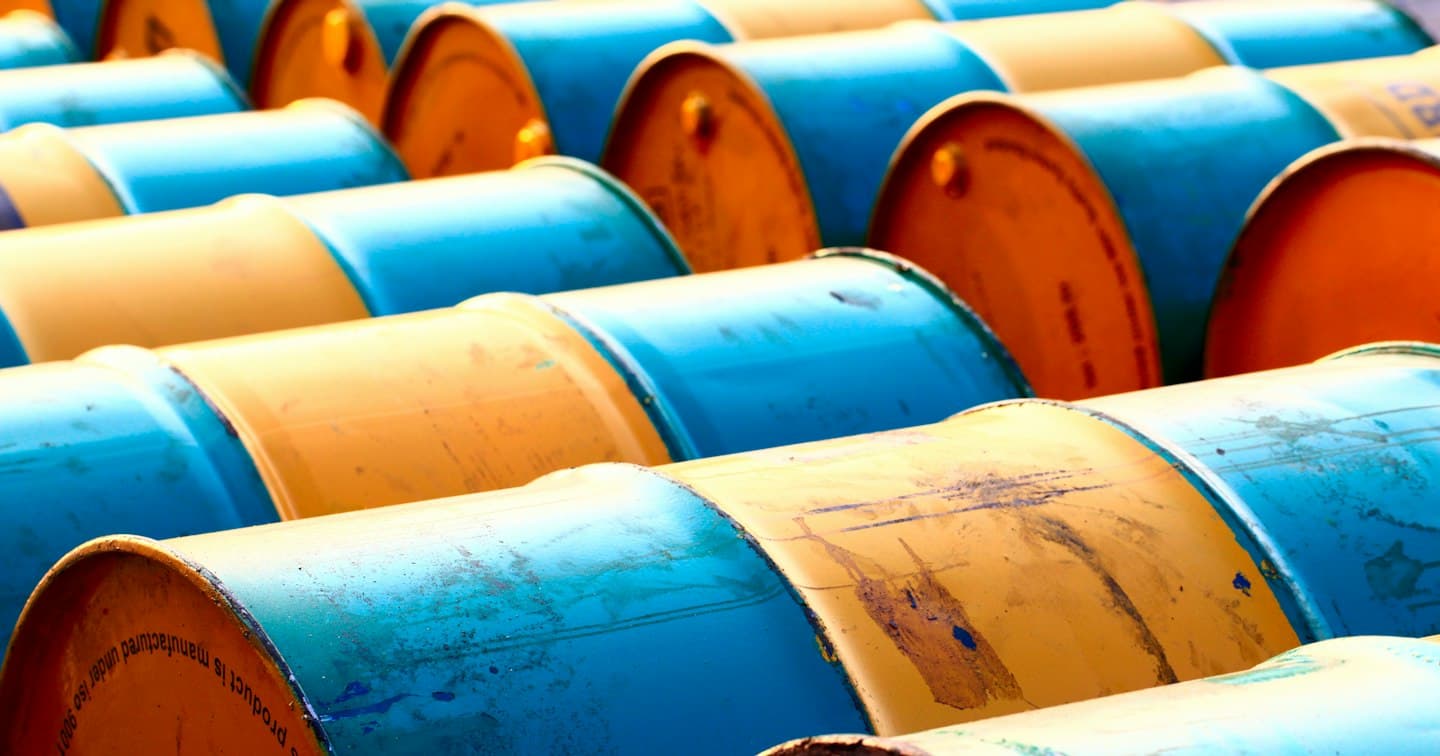
Pump prices are drifting down even though crude oil has not fallen much. Reuters reported on 27 October that Brent crude had risen above $117 a barrel the week before, its highest since April, after a wave of Iranian attacks on tankers around the Strait of Hormuz. Before the conflict began in February, that waterway carried around a fifth of the world's energy supplies.
On Wednesday Brent rose $1.44 to settle at $115.32 a barrel, Reuters reported. The rise came on renewed concern about supply disruption in the Middle East. The concerns were continued fighting in Yemen, a Houthi claim to have hit Saudi Arabia's biggest oil refinery with a missile, and worries that the US could strike Iran after the US midterm elections on 3 November. Saudi authorities did not immediately confirm the refinery strike.
Diplomacy is pulling the other way. Reuters reports that Qatari mediators have presented Iran with a new draft deal to end the war. A senior Iranian official said Doha had put forward only unacceptable ideas. Iran's foreign minister said Tehran was still giving diplomacy a chance. Early on Thursday, Brent slipped 82 cents to $114.50 as hopes of peace talks eased some of the supply worries, Reuters reported.
For UK drivers, this means oil is still very high, and a single attack or ceasefire headline can move it several dollars in a day. The steady trickle of forecourt cuts does not mean the pressure behind prices has gone.
Why diesel is lagging, and what could help
Diesel cuts have stalled compared with petrol. Two developments reported this week bear on diesel supply in particular:
- Russia: Reuters reported that Russian refiners are producing more diesel in October. This follows export quotas granted by the government after the Kremlin's supply agreement with the US.
- China: China has issued a rare fourth batch of export quotas for petrol, diesel and jet fuel, Reuters reported on 28 October, bringing its 2026 total in line with 2025.
Both could add to the world's supply of refined fuel. Our sources do not say whether, or when, that would show up in UK diesel prices.
Two more things could matter. The US Energy Information Administration reported an unexpected draw of 1.9 million barrels from US crude stocks in the week to 23 October. That helped support prices. OPEC+ producers meet on Sunday and are expected to keep their December output targets unchanged, according to Reuters.
The pound
Oil is priced in dollars, so the exchange rate matters too. On Wednesday morning, before the Budget, sterling was trading at about $1.3283, down 0.18%, as the dollar firmed ahead of a US Federal Reserve decision, Investing.com reported. It reported later that the pound steadied after the Budget. A weaker pound makes each barrel cost more in sterling terms.
How to pay less this week
The tax will not change before July, so where you fill up is the biggest saving you control.
- Supermarkets are cheaper on average. Supermarket forecourts average 170.4p for E10 and 195.9p for diesel. Other forecourts average 173p and 199.4p. Morrisons (170.5p), Sainsbury's and Texaco (both 170.7p) are among the cheapest big brands for E10. Tesco has the lowest diesel average of the large brands at 195.9p. Compare them on our brands page.
- Avoid motorway services if you can. Motorway forecourts average 192p for E10 and 216.6p for diesel. That is about 19.5p and 18p a litre above the UK averages, or roughly £10 more for a 55-litre tank.
- Prices vary by area. Northern Ireland is cheapest, with E10 averaging 164.8p and diesel 190.9p. The North East (170.9p for E10) and Yorkshire and the Humber (171.3p) are the cheapest regions in Great Britain. The South East is the dearest region for E10 at 174.4p.
Prices change many times a week. Check the live map before you set off to find the cheapest forecourt near you.
Sources
- Budget 2026 (HTML) — HM Treasury / GOV.UK
- Autumn Budget 2026: What it means for motorists — RAC
- Oil Prices Rise on Yemen Conflict and Saudi Refinery Attack (Reuters, 28 Oct) — Reuters via Global Banking & Finance Review
- Oil prices fall as peace hopes offset fears of growing Middle East conflict (Reuters, 29 Oct) — Reuters via TradingView
- Oil eases on Middle East diplomacy hopes, Saudi attacks keep supply worries alive (Reuters, 27 Oct) — Reuters via Yahoo Finance
- Sterling today: Pound slips as AI fears ebb; UK budget, Fed in focus — Investing.com
- FuelWise price data from the UK Government's Fuel Finder scheme (Open Government Licence v3.0).